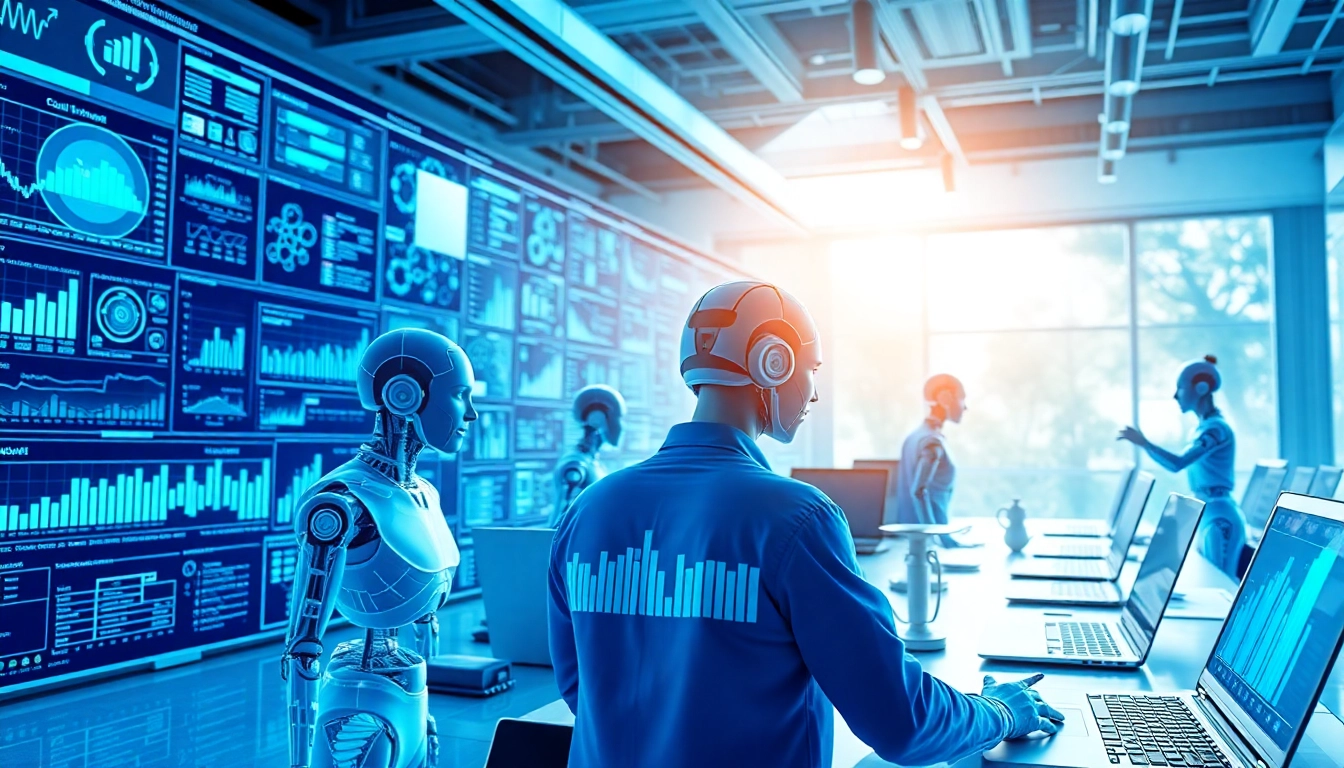
What are Ai Agents?
As technology evolves, the need for intelligent solutions that can assist us in both personal and professional arenas has become paramount. Enter Ai agents. These systems are designed to operate autonomously, making decisions and taking actions based on their environment. This article delves deep into the world of Ai agents, exploring their definitions, core functions, types, and how they differ from traditional software solutions.
Definition and Core Functions
Ai agents are software entities that act autonomously to complete tasks and make decisions based on perceptions of their environment. They are equipped with the ability to learn from past experiences to improve their performance. Typically, an Ai agent encompasses several core functions:
- Perception: The ability to interpret information from various inputs like data, voice, or visual cues.
- Action: The ability to take steps towards achieving specific goals based on its analysis.
- Learning: The capability to adapt and improve over time by analyzing the outcomes of previous actions.
Types of Ai Agents
Ai agents can be categorized into several types based on their functionalities and applications:
- Reactive Agents: These respond to immediate stimuli and lack historical awareness, functioning based solely on current inputs.
- Deliberative Agents: These agents possess a model of their environment and use this representation to make informed decisions.
- Learning Agents: Capable of improving their performance and adapting strategies through machine learning techniques.
- Hybrid Agents: Combine reactive and deliberative features, providing a more robust decision-making process.
Comparison with Traditional Software
Unlike traditional software, which operates under a fixed set of rules and logic, Ai agents exhibit flexibility and adaptability. The primary differences include:
- Autonomy: Ai agents can operate independently, while traditional software requires user input to function.
- Learning Capability: Ai agents utilize machine learning to refine their processes, unlike static traditional software.
- Complex Decision-Making: Ai agents can analyze multi-faceted data to make decisions, whereas traditional software typically follows linear decision paths.
How Ai Agents Work
Understanding how Ai agents function is essential for anyone looking to leverage their power. Here, we break down the key components involved in their operation.
Key Components of an Ai Agent
Effective Ai agents consist of several essential components, which include:
- Sensors: Devices or systems that collect data regarding the environment, enabling the agent to understand its surroundings.
- Actuators: These are mechanisms that allow the agent to take actions based on its decisions.
- Processing Unit: The brain of the agent, responsible for analyzing sensor data and generating responses.
- Learning Algorithm: This enables the agent to accrue knowledge and adapt its behavior based on previous experiences.
Machine Learning and Autonomy
Machine learning plays a pivotal role in the functionality of Ai agents. By leveraging algorithms that allow the analysis of vast amounts of data, machine learning empowers Ai agents to become not only responsive but also predictive:
- Supervised Learning: Agents learn from labeled data inputs to make future predictions or decisions.
- Unsupervised Learning: Agents identify patterns and relationships in data without prior labeling, inferring insights autonomously.
- Reinforcement Learning: Agents learn through trial and error, receiving feedback to understand which actions yield the best rewards.
Data Interaction and Processing
Data interaction is crucial to the efficacy of Ai agents. These systems engage with various data types, making it essential to process and utilize data effectively:
- Multi-Modal Inputs: Ai agents facilitate processing of diverse data, including text, audio, video, and more, allowing for nuanced decision-making.
- Real-Time Processing: The ability to analyze and act upon data instantly is critical for applications requiring immediate responses.
- Feedback Loops: Continuous data from interactions allows agents to adjust and improve their operations dynamically.
Applications of Ai Agents
From business to personal use, the applications of Ai agents are extensive and transformative. Below are some significant areas where Ai agents are making a difference.
Ai Agents in Business
Ai agents have revolutionized business operations across various sectors:
- Customer Service: Chatbots, powered by Ai agents, handle inquiries, provide support, and enhance user experience.
- Data Analysis: Ai agents analyze market trends and customer preferences, offering insights for strategic decisions.
- Process Automation: Routine tasks are automated, allowing employees to focus on more complex projects.
Ai Agents in Everyday Life
Ai agents also enhance personal efficiency and improve daily living:
- Personal Assistants: Systems like virtual assistants help manage schedules, answer questions, and control smart home devices.
- Healthcare: Ai agents assist in patient care, from monitoring health to providing reminders for appointments and medications.
- Smart Home Solutions: Devices that optimize energy use, enhance security, and improve convenience in daily routines.
Innovative Use Cases
Companies are continually discovering novel applications for Ai agents:
- Supply Chain Management: Ai agents optimize logistics, predict disruptions, and enhance inventory control.
- Environment Monitoring: Ai agents can track climate changes, assess wildlife populations, and monitor pollution levels.
- Education: Intelligent tutoring systems offer personalized learning experiences, adapting to the pace and style of each student.
Challenges in Implementing Ai Agents
While Ai agents present numerous benefits, they also pose various challenges that need to be addressed to harness their full potential.
Technical Barriers
The integration of Ai agents into existing systems often comes with significant technical challenges:
- Infrastructure Needs: Organizations must invest in robust infrastructure capable of supporting machine learning processes.
- Data Quality: The effectiveness of Ai agents relies heavily on high-quality data; poor data can lead to flawed insights.
- Interoperability: Ensuring that Ai agents can work seamlessly with existing software and systems is often challenging.
Ethics and Privacy Concerns
With the rise of Ai agents come ethical considerations about data privacy and decision-making transparency:
- Data Privacy: Collecting and storing personal data raises concerns regarding user consent and data protection.
- Bias and Fairness: Ai agents can perpetuate existing biases present in training data, leading to unfair outcomes in decision-making.
- Accountability: Determining responsibility for decisions made by Ai agents remains a gray area in legal contexts.
User Adoption and Trust Issues
For Ai agents to gain wider adoption, organizations must address trust challenges:
- Transparency: Users must be informed about how Ai agents make decisions and what data they are using.
- Usability: The complexity of Ai agents must be simplified to cater to users of varying technical skill levels.
- Demonstrating Value: Organizations need to provide tangible benefits to encourage users to adopt these technologies.
Future Trends for Ai Agents
The landscape of Ai agents is continuously evolving, and several exciting trends are on the horizon:
Growth in Capabilities
As machine learning techniques advance, Ai agents are expected to become even more capable. Expected developments include:
- Enhanced Contextual Understanding: Agents will better grasp nuanced human behaviors and intentions.
- More Personalization: Tailored interactions based on user preferences and past interactions will become standard.
Integration with Emerging Technologies
The convergence of Ai agents with other technologies will lead to powerful synergies:
- Quantum Computing: Will provide the processing power needed for more complex decision-making by Ai agents.
- IoT Integration: Ai agents will manage vast networks of IoT devices, coordinating them seamlessly.
Potential Impact on Job Markets
The rise of Ai agents could significantly reshape job markets worldwide:
- Job Transformation: Many roles will shift towards oversight and maintenance of Ai systems rather than purely operational tasks.
- Creation of New Jobs: Emerging fields will require new skill sets that align with Ai technologies and management.
FAQs
1. What are the primary functions of Ai agents?
Ai agents perceive their environment, take autonomous actions to achieve goals, and learn from past experiences to enhance performance.
2. How do Ai agents differ from traditional software?
Unlike traditional software, Ai agents operate autonomously, have learning capabilities, and can make complex decisions based on data.
3. What types of data can Ai agents process?
Ai agents can handle multimodal data, including text, audio, video, and environmental inputs, facilitating rich interactions.
4. What challenges do organizations face in implementing Ai agents?
Challenges include infrastructure requirements, data quality issues, ethical concerns, and user trust and adoption hurdles.
5. What trends can we expect in the future of Ai agents?
Expect growth in capabilities, integration with emerging technologies, and a significant impact on job markets globally.